BPC-157 left the stomach and filled a bibliography
The animal record spreads across tissues. The human record occupies much less space.
The stomach-derived fragment
BPC-157 is a synthetic peptide of fifteen amino acids, based on part of a protein found in human gastric juice. Its full name is Body Protection Compound 157. The stomach origin matters because protection against tissue injury was the initial research question, rather than an established general-purpose healing effect.
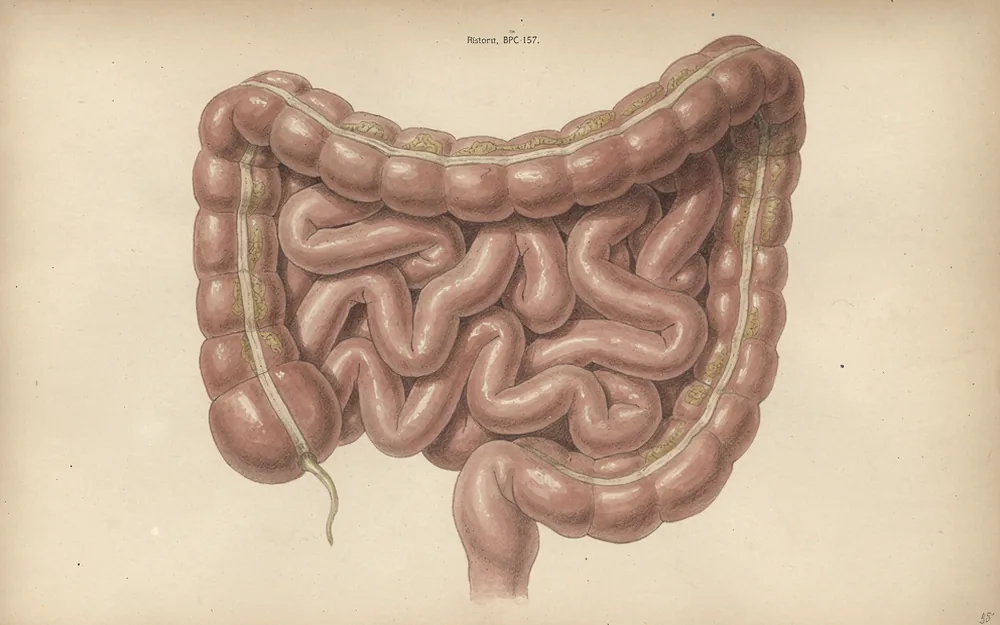
The 2004 gastric-ulcer experiment tested Wistar rats. BPC-157 reduced ulcer area and accelerated healing; intramuscular delivery outperformed intragastric delivery. At higher study doses, the reported ulcer-formation inhibition ratio was 45.7–65.6%. That figure describes the rat ulcer models.
I’d place this stomach experiment before the more expansive claims. It supplies an identifiable starting specimen: a synthetic fragment, a damaged gastric surface and a measured animal outcome. The title does not conceal where the work took place.
Blood returning to injured muscle
The 2017 vascular experiment combined chick tissue, a rat hindlimb model and human vascular endothelial cells. BPC-157 increased vessel density and accelerated blood-flow recovery in injured muscle. The human component consisted of cultured cells rather than volunteers.
Angiogenesis is the growth of new blood vessels. In this work the proposed mechanism involved VEGFR2, a receptor on vessel-lining cells, and subsequent signalling linked to nitric oxide. Blocking endocytosis, the process by which cells take material inside, blocked the effects. That intervention is more informative than merely noting that a treated sample looked better.
I respect an experiment that interferes with its own proposed mechanism. It helps tie the observation to a process. The evidence still comes from animal and cell settings: blood-flow recovery in rat muscle does not establish healing of a human tendon.

Stable in gastric juice, brief in blood
The description “stable gastric peptide” can suggest a more general durability than the research establishes. The 2022 pharmacokinetic study examined rats and beagle dogs and reported an elimination half-life under 30 minutes for the original peptide, with rapid breakdown into smaller fragments.
After intramuscular administration, reported bioavailability was about 14–19% in rats and about 45–51% in dogs. Bioavailability means the fraction reaching the systemic circulation. The different species produced different figures; neither establishes the corresponding human figure.
I’m wary of attaching a healing timetable to those numbers. Time in blood and time to a tissue outcome are different measurements. Stability in gastric juice does not establish effective oral delivery in humans, either. The animal pharmacokinetics are useful precisely because they complicate the shorthand.
Two participants cannot fill the human shelf
The 2025 intravenous safety pilot involved two healthy adults and administered up to 20 mg of BPC-157. No adverse events or measurable changes in the reported cardiac, liver, kidney, thyroid or glucose biomarkers were observed. That brief observation addressed safety rather than efficacy.
The 2025 narrative review identified only three human pilot studies and found rigorous large-scale trials lacking. It also raised the concentration of foundational research within one group. Wide replication requires more than a busy bibliography.
I initially gave the breadth of the animal literature too much credit. After the human review, my confidence needed a smaller label: which result has been reproduced by unrelated groups, and which useful patient outcome has actually been tested? There is room for interest without treating that missing work as completed.
The reputation has outrun its paperwork
Reports of less joint stiffness and calmer digestive symptoms are anecdotal accounts, not clinical evidence. The community record also contains nausea, tiredness, headaches and local reactions. It cannot establish a side-effect rate or identify the cause of a particular change.
BPC-157 is not an approved medicine anywhere and is prohibited in sport at all times under WADA’s non-approved-substances category. The narrative review treats it as investigational and raises concerns about non-regulated availability. Product identity and purity outside formal studies add a separate uncertainty.
Its pro-angiogenic mechanism also raises a theoretical question about unwanted vessel growth, including in a cancer setting. That concern follows from the vascular mechanism experiments; it is not a demonstrated human cancer outcome. Long-term human safety remains unknown.
The broad claims about weight loss, muscle gain or testosterone do not have support in the published evidence assessed here. My interest ends well before those slogans. BPC-157’s rat findings justify better experiments, especially replication and controlled human trials, rather than a settled catalogue of benefits.